Structural Tree Cabling, Bracing & Plant Health in Montclair State University, NJ


A mature, majestic shade tree adds immense aesthetic beauty and financial value to your property. However, as trees age, they often develop severe structural defects that threaten their survival. Co-dominant stems (trunks that split into a heavy V-shape) grow incredibly heavy and become highly susceptible to splitting right down the middle during a heavy windstorm. When a prized tree begins to show signs of structural fatigue or biological decline, cutting it down should be your absolute last resort. We are Montclair State University, NJ’s leading experts in advanced tree health care and structural preservation. Through precision tree cabling and bracing, we physically reinforce the architecture of your trees, ensuring they stand strong for generations.

Is your favorite tree starting to split? We can save it. Call our arborists: 183

The Biomechanics of Tree Cabling and Bracing


Proactive Tree Health Care and Soil Aeration


Structural support is only half the equation; a tree must be biologically healthy and deeply rooted to heal itself. Urban and suburban environments in Montclair State University, NJ are notoriously harsh on root systems. Constant foot traffic, lawnmowers, and nearby construction severely compact the soil, suffocating the delicate feeder roots and preventing the uptake of water and oxygen. We utilize high-pressure pneumatic air-spades to safely fracture and aerate the compacted soil in the critical root zone. We then incorporate organic compost and deep-root fertilizers, instantly revitalizing the tree’s subterranean environment without damaging the roots.


istockphoto-2184937541-612x612
Tree Preservation and Maintenance

Disease and Fungal Pathogen Management in Montclair State University, NJ


A tree suffering from environmental stress becomes highly vulnerable to local fungal pathogens and aggressive wood-boring insects. We do not just guess what the problem is; we diagnose it. If your canopy is thinning, the leaves are discoloring prematurely in the summer, or you spot tiny piles of sawdust at the base of the trunk, our arborists identify the specific biological vector. We implement targeted, systemic treatments—such as safe, direct trunk injections—that deliver the exact necessary fungicides or insecticides directly into the tree's vascular system, curing the infection from the inside out.


Frequently Asked Questions


  • Does drilling holes for cables and steel braces hurt the tree? When done correctly by a professional, the damage is incredibly minimal and temporary. A healthy tree possesses an amazing ability to compartmentalize small wounds. It will quickly wall off the drilled hole internally to prevent decay, and over a few seasons, it will actually grow fresh callous wood entirely over the hardware, permanently embedding the steel support system into its structure.
  • How long do tree cables last up in the canopy? High-quality, galvanized steel EHS cables and hardware are designed to last for decades. However, as the tree continues to grow taller and wider, the dynamic loads and tension will naturally change. We recommend having your cabled trees inspected every 3 to 5 years to ensure the tension is still correct and doing its job safely.
  • Why shouldn't I just wrap a heavy chain tightly around the branches to hold them together? Wrapping anything tightly around the outer circumference of a living branch or trunk is catastrophic. As the tree grows wider, the chain will eventually strangle and crush the delicate cambium layer just beneath the bark. This completely cuts off the flow of water and nutrients, effectively killing the branch from that point upward. We always drill through the wood, which allows the tree to continue expanding normally.
  • What is deep-root fertilization and why is it better than granular lawn fertilizer? Instead of just broadcasting granular fertilizer on top of your lawn (where the grass roots aggressively steal most of it), we use a specialized metal probe to inject a high-pressure liquid blend of nutrients and organic soil enhancers 8 to 12 inches deep into the soil. We put the food exactly where the tree's microscopic feeder roots actively absorb moisture.
Licensed and Insured Tree Experts


Preserve Your Property’s Most Valuable Natural Assets


Do not wait for a heavy storm to split your favorite shade tree in half. Reinforce its structure and revitalize its roots with expert arboricultural science today.

Call to schedule your tree health assessment: 18334171744


Customer Reviews

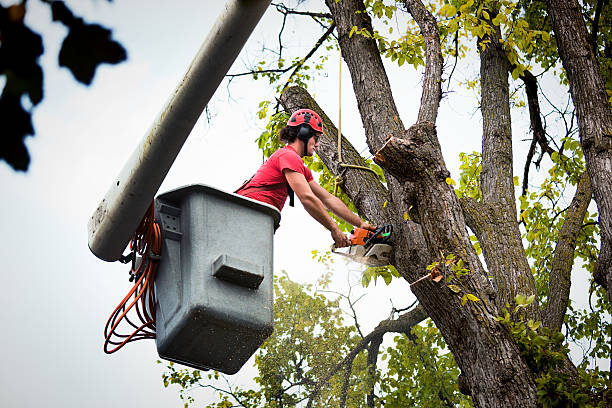
"We had an incredibly large, beautiful oak tree that developed a huge, scary crack down the middle. They came out and performed expert tree cabling and bracing high up in the branches. It completely saved the tree and looks totally seamless from the ground."

"Our favorite maple was looking very sick and losing its leaves early. Their arborists performed a deep-root fertilization treatment and aerated the hard soil. The tree bounced back incredibly well by the next spring. True tree health care experts."

"Highly knowledgeable professionals. They explained exactly how the steel cables would prevent our multi-trunk pine from splitting in the wind. I feel so much safer having that tree braced."


Montclair State University, NJ Insights: Population,
Zip Codes, Influence, and Service Areas

Plans for the State Normal school were initiated in 1903, and required a year for the State of New Jersey to grant permission to build the school. It was then established as New Jersey State Normal School at Montclair, a normal school, in 1908 approximately 5 years after the initial planning of the school. At the time, Governor John Franklin Fort attended the dedication of the school in 1908, and the school was to have its first principal Charles Sumner Chapin that same year. The first building constructed was College Hall, and it still stands today. At the time, the campus was around 25 acres (100,000 m2), had 8 faculty members and 187 students. The first graduating class, which numbered at 45 students, contained William O. Trapp, who would then go on to win the Pulitzer Prize for journalism in 1929. The first dormitory was then built five years later, in 1915, and is known as Russ Hall.

Zip Codes in Montclair State University, NJ that we also serve: 07043 07424


Cities Close To Montclair State University, NJ That We Also Serve


Click Here To Call Us (1833) 417-1744